
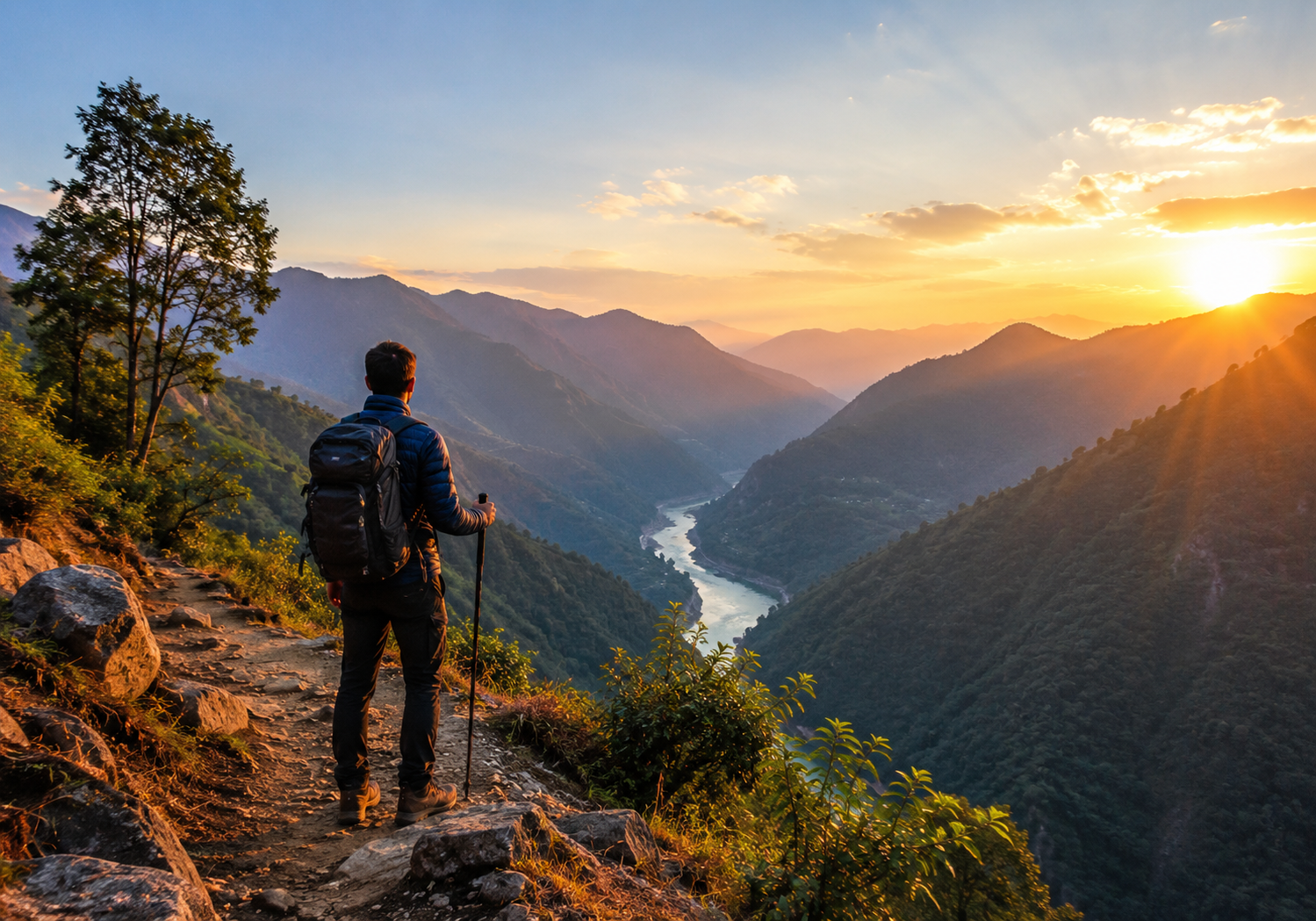

Trekking in Rishikesh is the escape every mountain lover keeps searching for. 🌄 This Himalayan town sits where the Ganges rushes out of the hills. It offers trails for total beginners and seasoned climbers alike. Snow-capped peaks, oak forests, and quiet village paths wait just outside the city. If you want fresh air, real silence, and a proper workout, trekking in Rishikesh delivers all three. This guide covers the best routes, ideal seasons, safety advice, and where to rest afterward. Every recommendation here comes from local guides who walk these trails year-round.
🌄 Why Rishikesh Is a Trekking Paradise
Rishikesh sits at the edge of the Garhwal Himalayas, roughly 1,360 feet above sea level. From here, trails climb steadily toward ridgelines that touch 8,000 feet or higher. The region blends spiritual energy with raw adventure in a way few places manage. Ashrams and temples sit minutes away from dense rhododendron forests. This mix makes trekking in Rishikesh feel different from a standard hill-station hike. You get river views, mountain silence, and sacred sites on the same trip. Local guides know these paths well, since many have walked them since childhood. That generational knowledge keeps trekking routes safe and well marked.
🧭 How to Reach the Trailheads
Most trailheads sit within a 30 to 90 minute drive from central Rishikesh. HR Nature Resort arranges early-morning taxis for guests heading to Kunjapuri or Nag Tibba. Shared jeeps also run from Tapovan and Laxman Jhula for budget-conscious travelers. Roads stay decent year-round, though monsoon landslides can cause short delays. Booking transport a day ahead saves time, especially for sunrise treks that start before dawn.
🌱 Why Local Expertise Matters
Every trail on this list has been walked and cross-checked by Garhwal-based trekking guides. The Uttarakhand Forest Department manages permits for several routes near reserve boundaries. Certified guides carry these permits and know which trails close during breeding or fire season. Choosing a registered operator protects both hikers and the fragile Himalayan ecosystem they walk through. This local knowledge is what keeps trekking in Rishikesh both safe and sustainable for future visitors.
🥾 Top Treks Near Rishikesh You Must Try
1. Kunjapuri Sunrise Trek
This is the easiest introduction to trekking in Rishikesh for first-timers. The climb takes about 45 minutes from the base parking point. At the top, Kunjapuri Devi Temple offers a 360-degree Himalayan sunrise view. On clear mornings, you can spot peaks like Bandarpunch and Gangotri group. Most visitors start the walk around 4:30 AM to catch first light. Descending takes less than 30 minutes, leaving plenty of time for breakfast back at the resort. The temple itself hosts a small Navratri fair each year, drawing local pilgrims too.
2. Nag Tibba Trek
Nag Tibba, meaning Serpent’s Peak, sits about 65 kilometers from Rishikesh. The summit reaches 9,915 feet, making it a solid weekend trekking in Rishikesh option. Forest trails wind through oak and rhododendron before opening into alpine meadows. Camping near the summit rewards trekkers with a sky full of stars. This route suits intermediate hikers with some prior trail experience. Most groups complete the round trip over two days, camping once near the ridge. Guides recommend booking permits at least a week ahead during peak autumn season.
3. Chandrashila Trek
Chandrashila sits above the famous Tungnath temple, one of the highest Shiva shrines in the world. The peak stands at 13,123 feet and offers views of Nanda Devi and Kedarnath ranges. This trek demands better fitness, so it suits experienced trekkers most. Many travelers combine it with a visit to Deoriatal for a fuller Himalayan circuit. Expect a full day on the trail, with an early start strongly recommended for clear views.
4. Deoria Tal Trek
This gentle trail leads to a pristine lake that mirrors the Chaukhamba peaks on calm mornings. The walk takes roughly two hours from Sari village. Families and casual walkers often pick this route since it stays moderate throughout. It remains one of the more relaxed hiking options in Rishikesh’s wider Garhwal region.
5. Neelkanth Mahadev Trek
Neelkanth combines pilgrimage with adventure, climbing through dense forest to a temple at 5,500 feet. The 12-kilometer route rewards walkers with valley views and quiet forest stretches. Locals consider this one of the most spiritually rich hikes near the resort.
🗣️ Local Guide Tip
Veteran guides suggest starting any full-day route before 6 AM to beat both heat and crowds. Carrying cash helps too, since small tea stalls along these trails rarely accept cards. Weather can shift fast above 8,000 feet, so a light rain jacket always earns its space in your bag.
📅 Best Time for Trekking in Rishikesh
Weather shapes every good trekking in Rishikesh plan, so timing matters more than gear. March to June brings warm days and blooming rhododendron forests, ideal for most routes. September to November offers the clearest mountain views and cool, stable weather. Monsoon months from July to August bring landslides and slippery trails, so most guides pause treks then. Winter treks from December to February suit only well-prepared hikers due to snow and ice. Checking local forecasts before any trekking in Rishikesh trip always pays off.
🎯 Trekking Difficulty Levels: Beginner to Advanced
Not every trail demands the same fitness or experience. Beginner trekking in Rishikesh includes short walks like Kunjapuri and Deoria Tal. Intermediate routes such as Nag Tibba need a few hours of daily walking stamina. Advanced trails like Chandrashila require prior high-altitude experience and proper acclimatization. Always match your chosen route to your actual fitness level, not your ambition. A local guide can help grade the trail honestly before you commit.
🎒 Essential Packing List for Rishikesh Treks
A good trekking in Rishikesh trip starts with the right gear in your bag. Pack sturdy trekking shoes with solid ankle support and good grip. Layer clothing works best, since mornings stay cold while afternoons warm up fast. Carry at least two liters of water and some energy bars or dry fruits. A basic first-aid kit, sunscreen, and a headlamp round out the essentials. Trekking poles help significantly on steep, loose sections of Himalayan trails. A lightweight rain cover for your backpack is worth packing between March and September. Cash, a power bank, and a printed map are smart backups when signal drops.
⚠️ Safety Tips Every Trekker Should Know
Safety should guide every decision on the trail, especially at higher altitudes. Always inform someone about your planned route and expected return time. Hire a certified local guide for any trekking in Rishikesh route above intermediate level. Check weather updates the morning of your hike, since mountain conditions shift quickly. Carry enough water, since dehydration is the most common trekking complaint in this region. Turn back if weather worsens or daylight starts running short. Never trek alone on unfamiliar high-altitude routes, even if you feel confident. Basic altitude awareness matters above 8,000 feet, so ascend gradually and rest when needed.
🏨 Where to Stay After Trekking in Rishikesh
After a long day on the trail, comfort matters as much as the view. HR Nature Resort sits close to the Ganges, offering a peaceful base for trekking in Rishikesh trips. The property blends Executive and Luxury rooms with private terraces and in-room spa access. Guests enjoy a 24/7 butler service after a demanding day on mountain trails. The resort’s location near Haridwar-Rishikesh road keeps most trekking routes within easy driving distance.
Warm hospitality, scenic surroundings, and proximity to ghats make this an ideal recovery stop. Many guests book a spa session here right after finishing a strenuous climb. Rooms come with steam and hot-water facilities, ideal for tired legs after a long descent. The in-house dining team also prepares high-energy meals suited to early trekking departures. Reserve your stay at HR Nature Resort and pair your trekking in Rishikesh adventure with genuine mountain comfort.
📊 Quick Facts at a Glance
- Nearest base town: Rishikesh, Uttarakhand, roughly 1,360 feet above sea level
- Trail range: 45-minute sunrise walks up to two-day ridge treks
- Best months: March–June and September–November
- Toughest local peak: Chandrashila, at 13,123 feet
- Ideal base stay: HR Nature Resort, near the Ganges and major trailheads
🔗 Explore More of Rishikesh
Planning a longer trip? These guides cover more of what the region offers. Check out our Rishikesh Tourism guide for a full overview of the town. Curious about spiritual sites, too? Our Rishikesh Temple guide covers seven sacred stops near the resort. Want river adventure after your trek? Read about Rishikesh River Rafting for the full experience. If you are timing your visit, our Best Time to Visit Rishikesh guide helps you plan around the seasons. Weekend travelers should also see our Weekend Getaway from Delhi to Rishikesh itinerary for a complete two-day plan. Those who prefer stillness over trails might also enjoy our Yoga Retreat in Rishikesh guide.
❓ Frequently Asked Questions
Q. Is trekking in Rishikesh suitable for beginners?
Yes, trekking in Rishikesh offers several beginner-friendly routes like Kunjapuri and Deoria Tal. Both trails stay short, gentle, and well marked for first-time hikers.
Q. What is the best season for trekking in Rishikesh?
September to November and March to June offer the clearest skies and safest trail conditions. Monsoon months bring landslide risk, so most guides pause these routes then.
Q. Do I need a guide for trekking in Rishikesh?
Beginner trails are manageable solo, but intermediate and advanced routes need a certified local guide. Guides know weather patterns, terrain risks, and shortcuts that keep every route safe.
Q. How difficult is trekking in Rishikesh for someone with no experience?
Beginner routes stay manageable for most fitness levels with a slow, steady pace. Building basic stamina through walking beforehand makes trekking in Rishikesh far more enjoyable.
Q. Where should I stay for a trekking in Rishikesh trip?
HR Nature Resort offers a comfortable, scenic base close to major trailheads and the Ganges. Its spa and butler service help travelers recover fast after a long hike.
Q. What should I pack for trekking in Rishikesh?
Pack sturdy shoes, layered clothing, water, energy snacks, and a basic first-aid kit. These essentials cover most routes across every difficulty level.
Q. Are permits required for trekking in Rishikesh?
Most short routes need no permit, but reserve-adjacent trails like parts of Nag Tibba do. Local guides or your resort desk can confirm current permit rules before you set out.
🌟 Final Thoughts
Trekking in Rishikesh rewards travelers with forest trails, sacred peaks, and genuine mountain silence. Whether you choose a short sunrise walk or a demanding high-altitude climb, this region delivers. Pick a route that matches your fitness, pack smart, and check the weather first. Then return to a warm bed and a Ganges view at HR Nature Resort. Book your stay today and turn your next trekking in Rishikesh trip into an unforgettable escape. 🏔️
About this guide: Compiled by the HR Hotels & Resorts travel desk with local Garhwal trekking guides. Last reviewed for the 2026 season. Trail conditions, timings, and permit rules can change, so always confirm details with a certified local guide before setting out.